

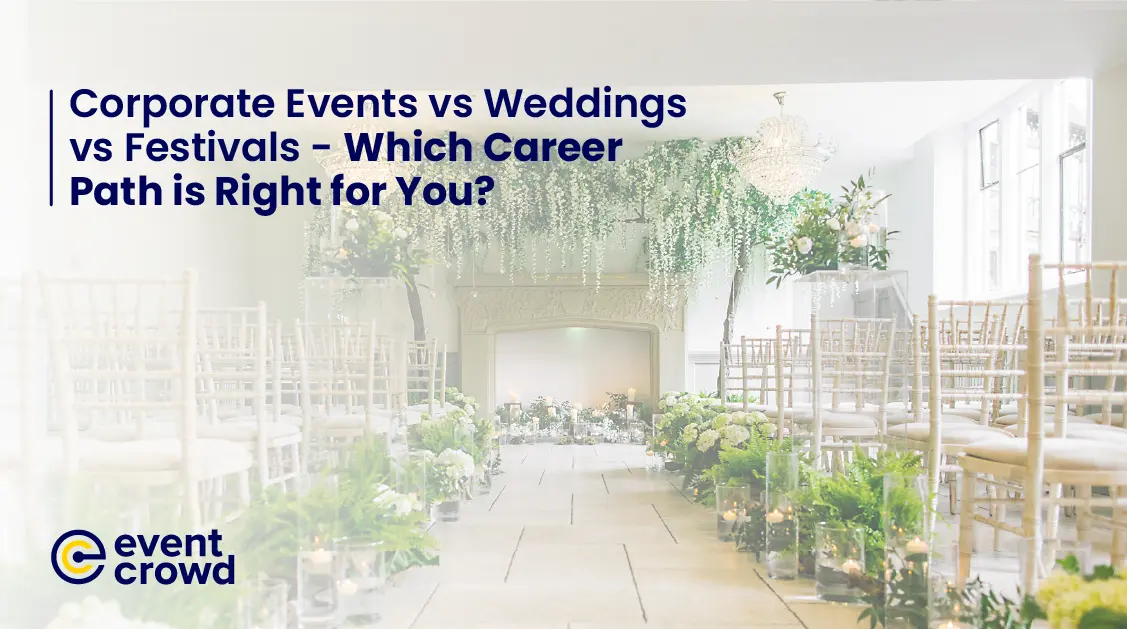
When picturing your career in events, it’s very easy to assume it’s a one size fits all path, however there is so much scope for specialising. The events industry covers a diverse range of event types, with some of the most popular including Corporate Events, Weddings and Festivals, which we will discuss in more detail below.
Whilst these different sectors fall under the same umbrella of events, they offer extremely varied experiences, working styles and pressures. It’s important to remember there’s no ‘right or wrong’ path, just one that fits your character, attributes and aspirations.
We will explore the differences between these core event types to assist you in understanding and making an informed decision on the right path for you.
Event managers don’t immediately specialise in one area of the industry, a lot of the time they will start with getting to know the fundamentals, then gradually lean towards the sector that suits them best.
Aspirations to specialise often blossom from your future ambitions, the environment you thrive in, the type of clients you are working with and the lifestyle you are looking for. Each of these sectors come with different expectations, both physically and emotionally. Some sectors are more formal and operational, whereas others allow for more creativity and flexibility.
Choosing a specialism isn’t an instant decision; it’s about aligning with what best fits your situation.

Corporate events are often perceived as the more ‘traditional’ or professional’ career path, however there is so much more to them.
Corporate events come in many different forms, from conferences and product launches to networking events.
These roles are often on behalf of an agency, or in-house event teams. They often liaise with stakeholders, sponsors, marketing teams and often manage budgets and clear performance objectives.
One advantage of being a corporate event planner is the consistency with clear professional development, opportunities and building long term relationships with clients. The majority of corporate events also operate predominantly during weekdays which can appeal to those who prefer a more structured working schedule.
There is also an element of pressure associated with corporate events, stakeholders often have high expectations with less room for creativity. With this being the nature of corporate events, it suits people who are comfortable in professional situations, motivated and strategy driven. If these qualities resonate with you, this may be the career path for you.

On the flip side of corporate events, wedding planning centres around emotionally driven events, where it all comes down to one special day to create arguably the most memorable day of a couple’s lives.
Wedding planners manage the entire timeline of a wedding, from the pre-event stages, to coordinating the details of the day itself, through to the post event stages ensuring the entire process runs smoothly from start to finish. Being a wedding planner requires characteristics of strong communication and the ability to manage expectations whilst keeping everything running smoothly behind the scenes, even when challenges arise.
Weddings can be rewarding in many different aspects, one of the most prevalent aspects being the connections you build with clients. As a wedding planner, you often work closely with couples over several months, becoming a trusted part of one of the most important moments of their lives. There is a particular emphasis on the creative element that plays into the design and styling of event spaces to bring a couple’s visions to life. Due to the nature of the job, many wedding planners go on to start their own businesses allowing them to tailor the client experience and values they want to offer.
Conversely, weddings also carry with them extremely high expectations, with pressure to strive for perfection and the emotional aspect often playing a part. The TV show ‘Bridezilla’s’ often comes to mind when thinking about the expectations that can be associated with planning a couple’s dream day. It’s also not uncommon to have to deal with difficult discussions around budgets and family dynamics.
The wedding industry isn’t for everyone, but with the right personality traits and skills, this might be the one for you!
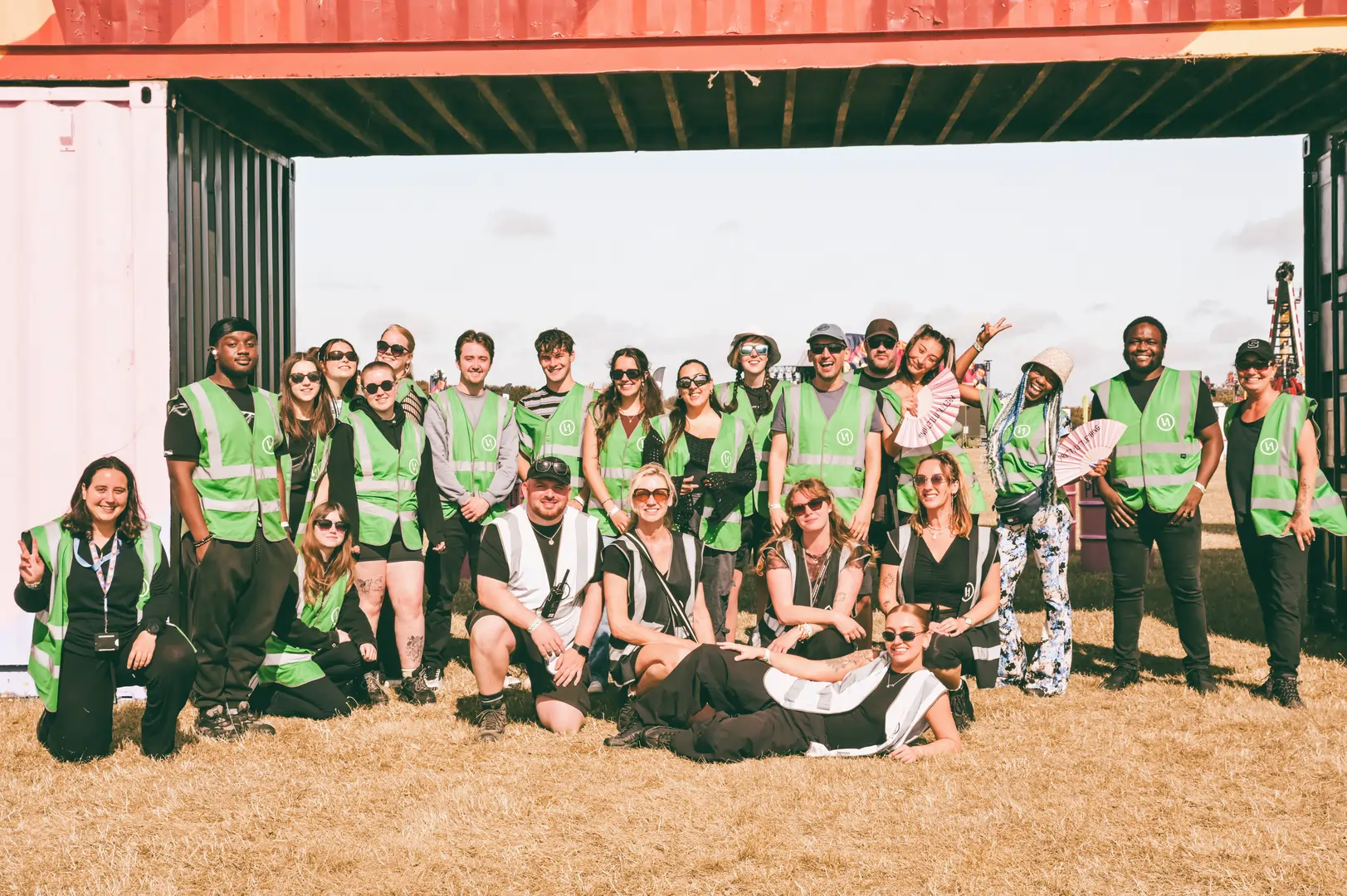
Large scale, fast paced and high energy are the three words that come to mind when thinking about a career within the festival management world. This sector spans over a variety of different events, including cultural, food festivals, community events and other outdoor seasonal experiences. Unlike other sectors within events, festivals can involve hundreds, thousands, or tens of thousands of attendees.
Festivals are one of the most sought after event roles to work in, in 2025 the UK’s festival revenue grew by 0.6% and is projected to reach £3.8 billion in 2026.
Working on a festival can be an incredibly rewarding industry as you see structures, tents and stages come together. A large aspect revolves around communication and coordination to make sure all staff internally and externally are aligned with what is happening during different stages of the event.
Key considerations include long hours, antisocial working times, physically demanding tasks and unpredictable weather conditions.
Festival work often attracts people who love fast paced, sociable, and dynamic situations. With festivals being one of the most exciting, atmospheric areas
Type | Key Focus | Typical Scale | Personality Fit |
Corporate | Business goals | Small – Large | Organised, strategic |
Weddings | Personal celebration | Small – Medium | Creative, empathetic |
Festivals | Public entertainment | Large | High energy, communicative |
Whether you have just started out in the industry, or are looking to specialise in a particular area, there is so much scope for growth within the industry. Many people jump between different sectors in order to finally find the area they are most keen to work in. Experience is often the key to discovering what suits you best. Gaining exposure to a variety of different events can help give you a visual idea of what situations you thrive most in.
The reality is, with whatever area you find suits you best, the core aspects of event management will follow through whatever type of event you work on. Once you have mastered these, finding your niche becomes much clearer. Many successful event professionals start with a broad understanding of the industry before deciding which sector suits them best.
At Event Crowd, we help aspiring event professionals develop the practical skills, confidence and knowledge needed to enter the industry successfully. Whether your ambition is to manage corporate conferences, plan luxury weddings or work behind the scenes at large scale festivals, the starting point is understanding how events truly operate.
If you are considering upskilling or breaking into the events industry, formal training can give you the foundation to explore your potential career paths. Event management doesn’t have a ‘right’ path, it’s about finding a career path that genuinely excites you.
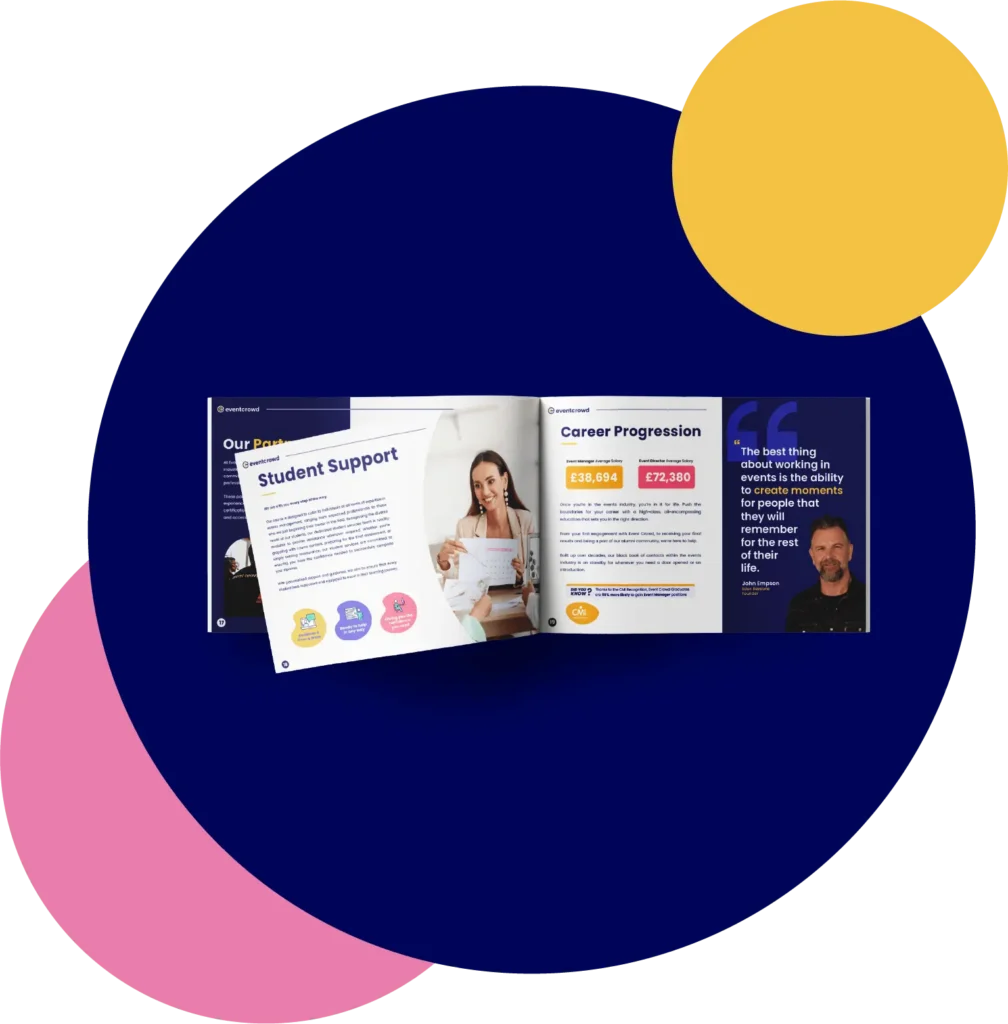
Get a clear overview of our online diplomas, student stories, reviews, and a short course explainer video. Everything you need to see how Event Crowd can help you advance in the events industry.
We’ll send a copy of the brochure directly to your email address.
We’ll send a copy of the brochure directly to your email address.

We’ll use your details to send our brochure directly to you.