

If you’re here, it’s likely that you’re interested in learning a little more about one of the UK’s most exciting and sought-after roles, event management!
In event management, no two days are the same. Every event is unique, whether it’s a trade show, a wedding, a conference, or even a festival, and so the role is never dull.
Event Management may be renowned as one of the most diverse and exciting job roles, but what does a typical day for an event manager actually entail? Follow along for a behind-the-scenes.

Event managers usually start bright and early, allowing enough time to prepare for upcoming events, but specific tasks and timing depend on whether it is a planning day or a show day.
Event managers are responsible for coordinating many moving parts and people to create the memorable events that we all know and love.
To ensure nothing slips through the cracks, most event managers begin the day by reviewing schedules and timelines using a project management software such as Monday.com or Trello. This also helps with setting priorities before communicating with team members.
On an event day, event managers will usually head straight to the venue, ready to liaise with contractors and give them a tour of the site so that they can set up smoothly. This usually takes place before clients arrive so that details like lighting, music, and furniture are set, dressed, and ready to go. We will explore show days in more depth later on.
Pro Insight – The importance of a morning routine
“I’m a fan of organising the days around structured times. So in the morning, I always make sure that my team of site crew and office staff get a briefing so they’ll know what’s going on that day…” – Clare Goodchild | Organise Chaos
Once the priorities for the day are set, the action begins!
The events industry is extremely collaborative, and so, event managers spend a lot of time communicating with others, handling initial calls, contacting vendors, and liaising with venues to bring events to life.
Once event managers have a grasp of the event concept, they will begin outreach with suppliers and vendors who could help bring it to life. This involves discussions around the event requirements and budgets.
As well as liaising with clients and vendors, event managers will handle various planning meetings with their internal team, where they delegate tasks, review timelines and marketing strategies and make sure projects are generally on track.
Pro Insight – A people-centric industry
“So our job effectively is to create amazing memories for the people that come through the doors of our events, be they festivals or sporting events, conferences or weddings. It’s about creating memories for people that they’ll take away and really love in the long term.” – Craig Mathie | Project 30 Events
As the day moves through into the afternoon, event managers move away from creative concepts towards the more nitty-gritty planning details. While these elements are not as fun as developing an event concept, they’re key to the event’s success.
Some of the key tasks include:
● Creating instructions for the event day

On show days, an event manager’s day in the life looks very different.
Show days are really where the magic happens. They’re the product of all the hard work and meticulous planning from the event lead up.
To make sure everything runs smoothly, event managers are usually the first on site.
On-site, event managers are the primary point of contact for any setup queries or problems.
To make sure they are prepared, most will begin with a handover from venue managers, before familiarising themselves with the site layout and emergency procedures.
This way, when they welcome vendors, they can pass on all of the important info, and guide them to the correct spaces to set up.
Event management does not stop when guests arrive. It’s very common for event managers to stay on-site to provide support and keep events on track.
It’s worth noting that even very experienced event managers deal with unexpected issues on event day. Planning for potential issues and anticipating solutions can make the events smoother, but nearly every event manager will do at least some event-day problem-solving.
Some event day tasks include:
Event managers are usually pretty exhausted after the event. While they will check in with clients on the day to check they are happy with the turn-out, most of the official follow-up happens the following day, after some rest.
Once they are back in the office, event managers begin reviewing the event’s performance. This can involve looking at attendance rates, immediate revenue, sending surveys for attendee feedback, and reviewing any press or social media posts. Most event managers will be keen to gather data and feedback, as this can be used to improve future events.
A crucial part of any event is the client’s feedback, so it’s common to schedule a call to discuss whether they were happy with the event and turnout, and how well it aligned with their vision. This also opens the opportunity to discuss other projects.
As you can tell, event management is an incredibly diverse and upbeat role, which is why it requires an equally diverse range of skills.
Individuals in this profession have to maintain a balance between the practical skills that keep events on track and the creative skills that enable them to create such memorable events, all the while communicating well and managing people. Key skills include:
Hopefully, we have been able to give you more of an insight into the wonderful role of event management! While it may not be the easiest career, it proves time and time again to be one of the most rewarding, enabling professionals to work with amazing people and be a part of bringing their ideas to life.
If you are an organised, yet creative person, who’s seeking more meaning or variety in their role, event management is a great route to explore. Start today, by viewing our Event Management Courses.
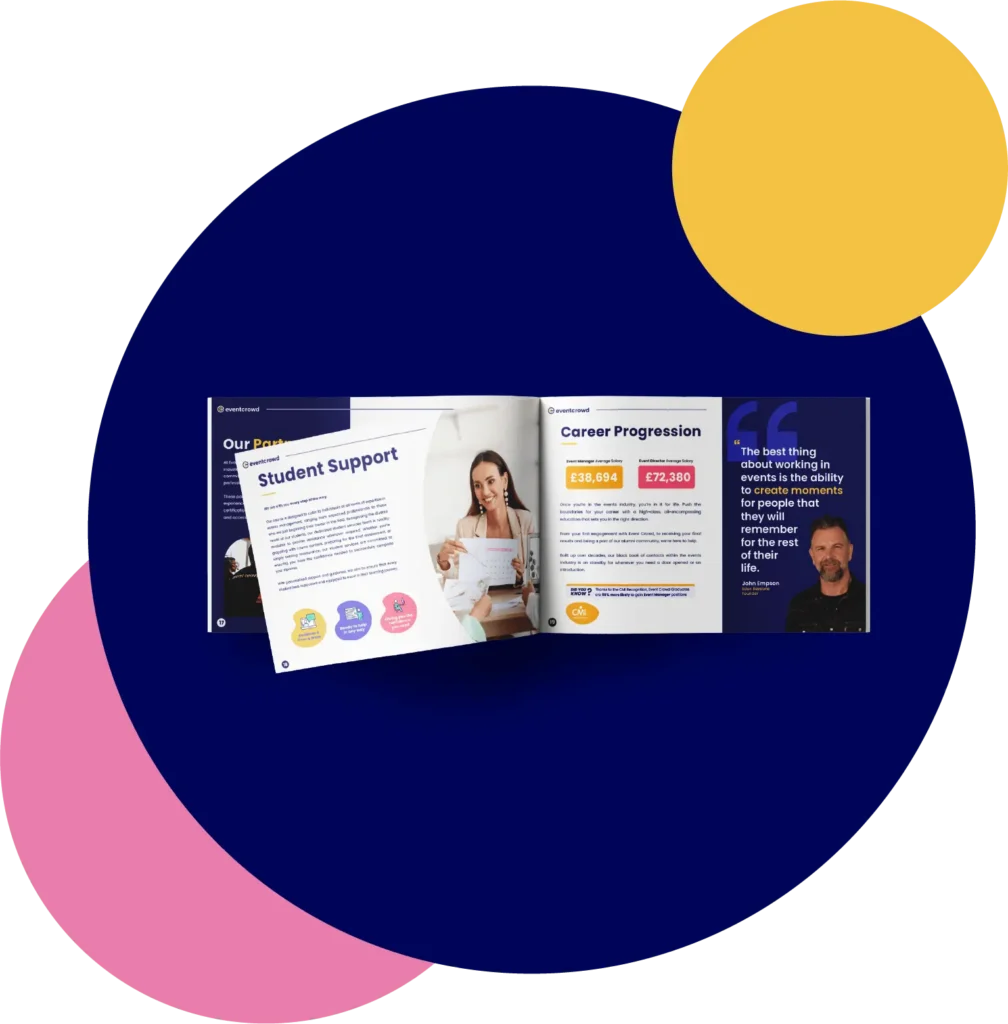
Get a clear overview of our online diplomas, student stories, reviews, and a short course explainer video. Everything you need to see how Event Crowd can help you advance in the events industry.
We’ll send a copy of the brochure directly to your email address.
We’ll send a copy of the brochure directly to your email address.

We’ll use your details to send our brochure directly to you.