The Importance of Accreditation in Event Management Education
At Event Crowd, we are proud of the recognition that our online Event Management courses have received. All of our diplomas are CPD certified and recognised by CIM and CMI, while our Level 5 diploma is also the only non-university course to earn an IEM accreditation. But, what do these certifications actually mean and why should they matter to you?
What Are the Accreditation Bodies?
CIM, CMI, CPD, and IEM are all independent, external institutions that regulate training courses against agreed industry standards. They assess the learning structure, curriculum quality, industry relevance, and professional development opportunities, evaluating the students’ career readiness upon completing the course.
When a diploma is recognised or accredited by such bodies, it gives both learners and employers confidence in the qualification’s worth. Here’s what each of them stand for:
CIM (The Chartered Institute of Marketing)
CIM is the world’s leading professional body for marketers. Chartered in the UK and operating since 1911, it sets global standards for marketing and business communication, ensuring that students gain industry-aligned skills and practical competence.
CMI (The Chartered Management Institute)
Founded in 1947, CMI is a British chartered body for management and leadership. It works with educational institutions and professionals across all sectors, raising the standards of management in the workplace. Therefore, CMI-recognised courses train people to become skilled and confident leaders in their chosen career path.
CPD (Continuing Professional Development)
The CPD Certification Service has been providing independent accreditation for training courses and programmes since 1996. This body assesses whether a course meets the highest quality standards as well as continuously adapts to the fast-changing industry environment.
IEM (Institute of Event Management)
The IEM is a professional body dedicated specifically to event management, setting the gold standard for training quality in the UK. Courses accredited by IEM reflect the level of knowledge, practical skills, and professionalism expected by top employers in the events sector.
What Does it Mean for Students?
Choosing a course that is recognised by professional bodies increases the overall credibility of your training. As an aspiring event manager, it benefits you in several ways:
Employability
Just like homeowners usually prefer to hire a chartered surveyor or business owners entrust their finances to chartered accountants, employers in the event industry are more likely to work with professionals who hold an accredited diploma. The certification signals to them that your course has been evaluated and backed by respected professional organisations, giving them trust in your competence.
Credibility
Accredited courses provide formal certifications that hold official recognition beyond the training provider. This means that opting for an online diploma, as opposed to a traditional university degree, will have no negative impacts on your career prospects as an events professional. On the contrary, these qualifications will boost your CV and overall credibility, helping you stand out in this highly competitive sector.
Standards-Based Training
When enrolling into a course, you want to be sure that you’ll get the best training possible, giving you the real-world skills and practical knowledge you need to kickstart a successful career. Accreditation warrants that the course’s content meets industry standards, assuring that you will receive relevant, up-to-date education.
Start Your Events Career with Confidence
If you’re serious about building a career in events, choosing an accredited diploma is essential to gain industry-aligned training and recognised qualifications. The Event Crowd’s Event Management courses offer that and more.
Created by a team of experts, with more than 500 years of combined experience, our courses are built to reflect the realities of high-level events, from big budget weddings to major festivals. The best part? All modules and resources are fully online, so you can learn at your own pace, alongside other commitments.
After completing your chosen diploma with the Event Crowd, you’ll gain entry to our exclusive Alumni Network where you can find further career support and exclusive work opportunities. Ready to start building your future?
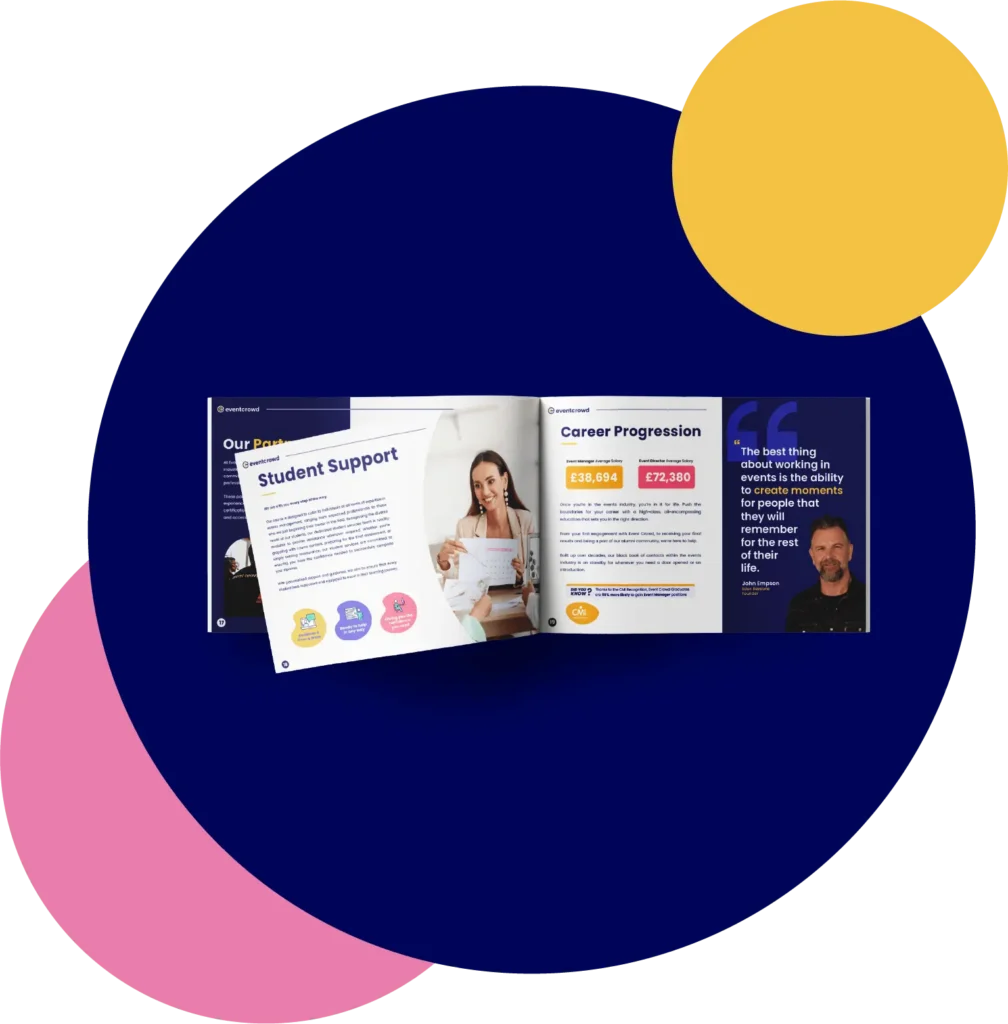
Download our Info Pack
Get a clear overview of our online diplomas, student stories, reviews, and a short course explainer video. Everything you need to see how Event Crowd can help you advance in the events industry.
Download Brochure
We’ll send a copy of the brochure directly to your email address.
Download Brochure
We’ll send a copy of the brochure directly to your email address.
We’ll use your details to send our brochure directly to you.