


Online learning is the fastest-growing sector in education, and it’s only growing in popularity year on year. While it’s a natural successor to traditional in-person methods, COVID-19 and the following lockdowns were a catalyst in bringing online learning mainstream.
Education providers weren’t prepared for the rapid switch to digital, and yet, many people thrived in the remote working environment, enjoying the flexibility, comfort, savings and easy access to resources that come alongside.
Since this switch, online learning has only continued to grow and develop! In fact, in the online education market, the number of users is expected to amount to 1.2bn by 2030.
Despite being commonplace in the modern education landscape, there are still some misconceptions around online learning. That’s why, in this guide, we’re debunking 6 of the most common online learning myths.

This is one of the most common myths about online learning, and with modern courses, it’s completely outdated. In fact, many employers actually respect the discipline and motivation required to complete online courses at home.
Before debunking this myth, it is useful to understand where it comes from. Early online courses were established as far back as the late 90s, and they faced a lot of scepticism from employers who were concerned with the credibility and quality of learning. The primary issue with the courses was the lack of accreditation, which introduced doubts surrounding quality and credibility. Technology was another concern. At this stage, the internet was largely static, and digital resource libraries were minimal, so many felt the online learning experience would be too “passive” to have significant value.
In the last decade alone, the online learning industry has experienced exponential investment and development, shifting from what was once a niche sector to the cornerstone of corporate training and higher education. For an idea of the numbers, $80 billion in venture capital has been invested in the broader edtech space since 2010. With this investment and focused development, the reputation of online courses has shifted dramatically. Here are the key changes:
Accredited online courses are now provided by professional bodies and educational institutions that are well-respected in the industry, making them much easier for employers to trust.
There was a time when online courses offered distinct qualifications from those that could be achieved in-person, and many employers didn’t fully understand the quality of education that they represented. Now accredited online courses can offer the same qualifications as traditional education providers, bridging the gap between the two education types.
For example, at Event Crowd, we offer industry-accredited online event management diplomas (Level 4 and Level 5) recognised by the IEM, CMI and CIM.
There used to be a concern that, without the practical elements, online courses did not provide the same quality of education as on-campus options. However, modern online courses are specifically designed to encourage active and dynamic learning experiences that engage, challenge, and assess students, much like traditional in-person methods.
While all of these factors have significantly improved employer perceptions, a key indicator of the changing attitudes is the use of online learning models in the workplace. Over 90% of corporations now use online learning as a core part of internal upskilling and professional development, compared with just 4% in 1995. If employers trust the courses enough to use them internally, it’s probably safe to say they take them seriously!
Corporate events are often perceived as the more ‘traditional’ or professional’ career path, however there is so much more to them.
Corporate events come in many different forms, from conferences and product launches to networking events.
These roles are often on behalf of an agency, or in-house event teams. They often liaise with stakeholders, sponsors, marketing teams and often manage budgets and clear performance objectives.
One advantage of being a corporate event planner is the consistency with clear professional development, opportunities and building long term relationships with clients. The majority of corporate events also operate predominantly during weekdays which can appeal to those who prefer a more structured working schedule.
There is also an element of pressure associated with corporate events; stakeholders often have high expectations with less room for creativity. With this being the nature of corporate events, it suits people who are comfortable in professional situations, motivated and strategy driven. If these qualities resonate with you, this may be the career path for you.
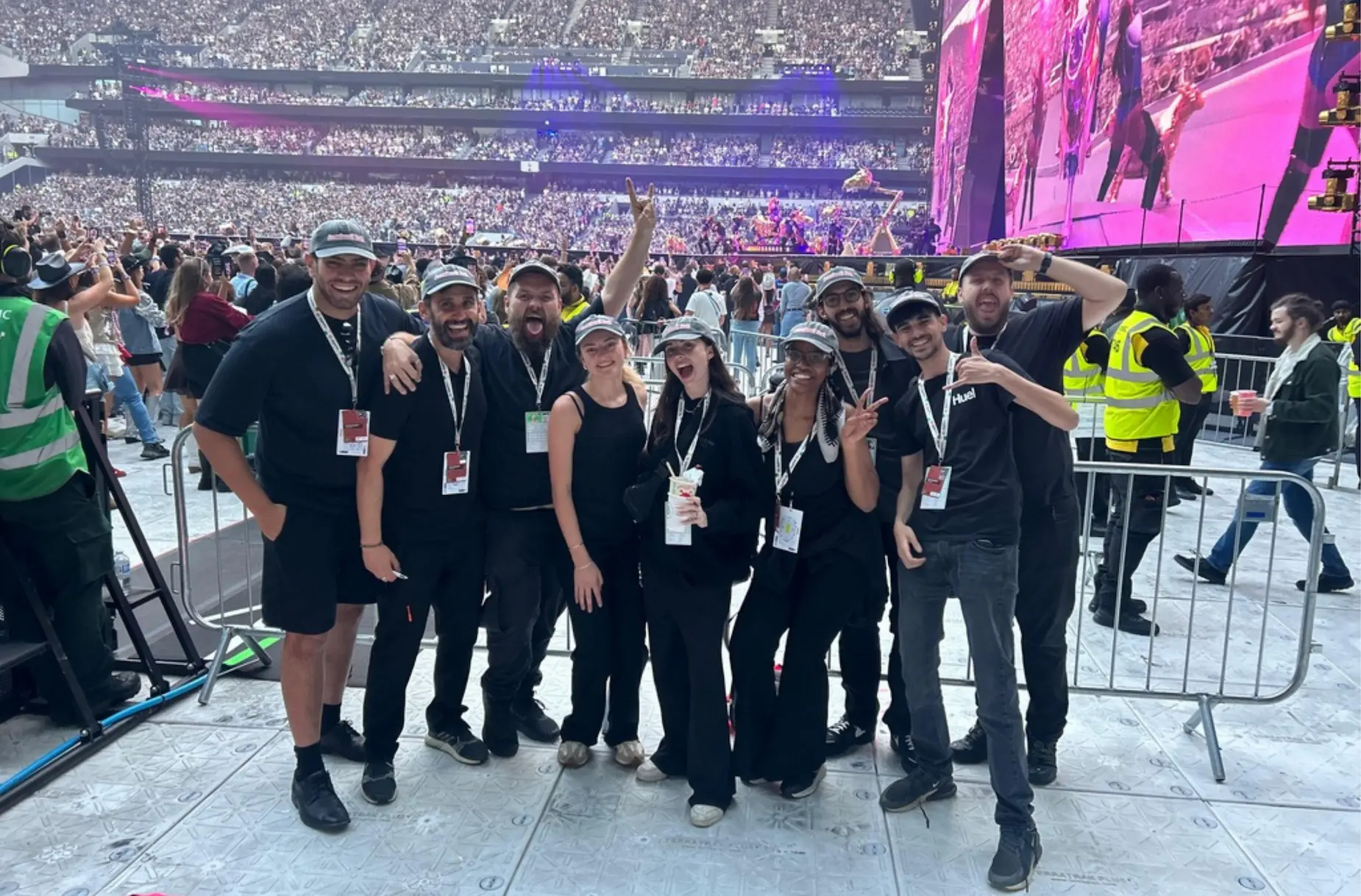
The idea that online learning is easier than traditional learning methods is a very common but false misconception. Online learning brings distinct advantages and disadvantages, but it’s not “easier” than in-person alternatives.
Online learning requires great willpower, discipline and motivation, because it doesn’t follow the same rigid structure and immediate accountability that comes with a classroom environment. Instead, the courses are self-paced, so students must manage their own time and workload.
While the courses require more discipline, many people enjoy online learning for this same reason, as it allows much greater flexibility surrounding when and where you decide to work.
At Event Crowd, our courses are broken down into structured modules and projects to help students work methodically. Every pupil also receives a tutor, who checks in at regular intervals to ensure everything is running on track.
Often, people mistake the notion of self-paced work with a lack of support, which couldn’t be further from the truth. In fact, online courses usually offer the same level of support, if not more than some of the in-person alternatives!
Just like an on-campus course, online courses usually give you access to a tutor, mentoring, and wider student communities to support your study and career.
For example, on our event management courses, every pupil is assigned a one-to-one tutor to offer personalised guidance and support as they complete their study. Pupils are entitled to unlimited calls with their tutor, so they never feel lost or alone while on the course.
Our tutors don’t just mentor, they also seek job opportunities to help pupils to start their careers, going above and beyond the typical tutoring role. Alongside this support, we’re also partnered with employability experts, who offer interview and CV tips.
Of course, a significant part of student support is the peers, which is why each of our pupils becomes part of a growing network of event professionals and alumni, creating a network of like-minded professionals that can share opportunities and support each other’s future careers.
Event Crowd’s Student Support
All Event Crowd students receive a dedicated course tutor, who will support them throughout their studies with us. This includes answering questions about the course, helping them through modules they may be getting stuck on, and creating personalised timetables/schedules if the student would find that helpful.
In addition to course support, our course tutors actively seek out paid work experience for our students, assisting with their career progression through our ‘2-Year Career Support Guarantee’.

This follows on from our previous myth. While online learning may not bring you face-to-face with peers in a classroom environment, it is by no means an isolating experience. In a classroom, you might meet 30 people; in an online course, your community is global!
Many online courses involve collaborative sections, or breakout rooms, where professionals can discuss their ideas with others in the course. They will often encourage these professionals to connect afterwards to build their network.
As we mentioned previously, most courses offer a tutor, offering one-to-one hand-holding and support the whole way through the course.
Additionally, organisers of online courses are well aware that a lot of the work is solo and self-paced. Because of this factor, they often go the extra mile, hosting networking days, creating communities of alumni, and connecting individuals on similar courses to build a network of like-minded professionals. The work may be remote, but it should never feel isolating.
This online learning myth is one of our favourites to debunk, as university is just one of many routes into a successful events career, and our alumni are outstanding proof of this!
Some people start their event careers through a university degree, some prefer volunteering and internships, while others are more drawn to event management diplomas and online learning courses.
Each of these is a valid pathway into a successful career in events, but the right option for you will depend on your existing skills, how quickly you want to start working and the type of learning method you would like to use.
University can be a great pathway into events if you have a lot of time and money to invest in upskilling and want the traditional experience on campus. However, if you’re requalifying, wanting faster career entry, more learning flexibility or specialist advice from experts in the field, event management diplomas are the way forward, equipping you with all the skills you need to thrive in an events career.
We hope this guide has helped settle some concerns regarding online learning courses. If you have any residual questions, don’t hesitate to get in touch with our team!
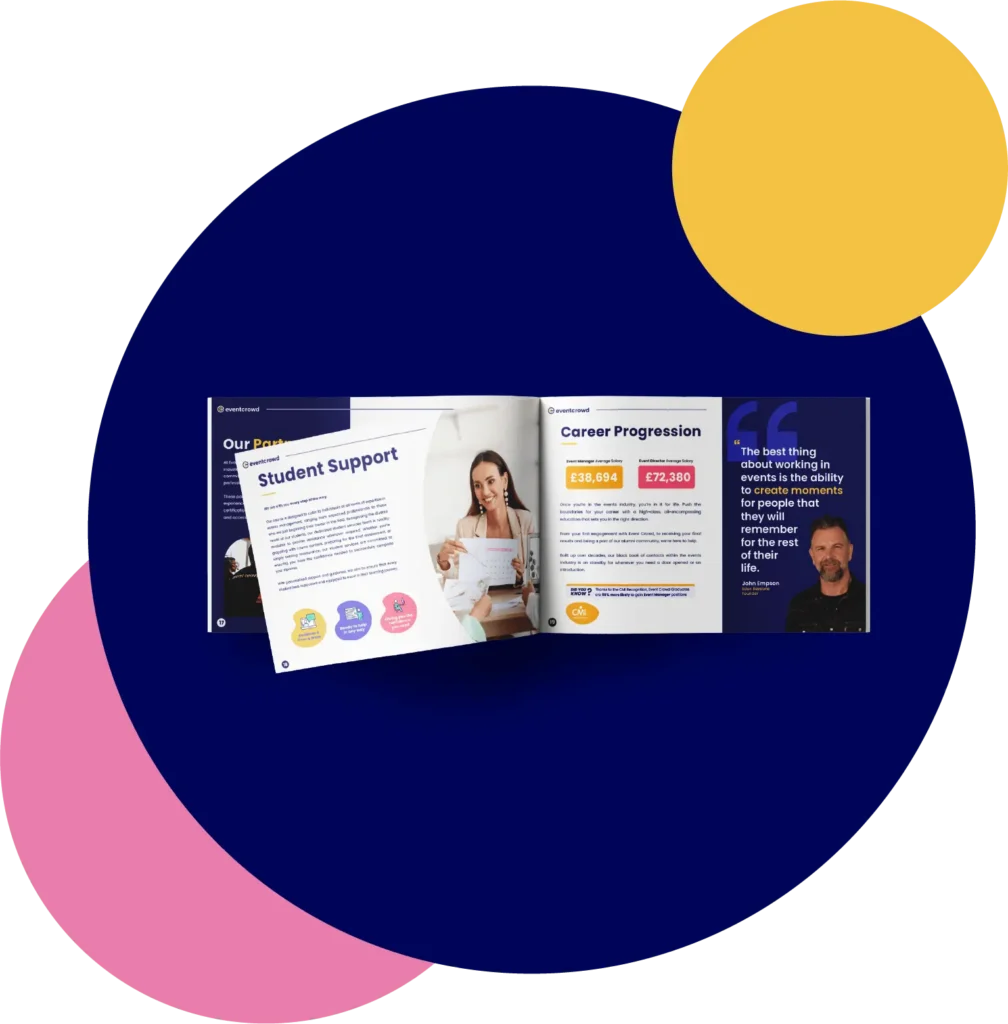
Get a clear overview of our online diplomas, student stories, reviews, and a short course explainer video. Everything you need to see how Event Crowd can help you advance in the events industry.
We’ll send a copy of the brochure directly to your email address.
We’ll send a copy of the brochure directly to your email address.

We’ll use your details to send our brochure directly to you.